


American Black Bear – Oscar
(Ursus americanus)
Meet Oscar
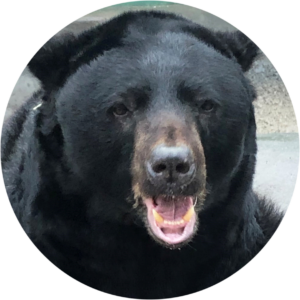
Oscar’s story is one of quiet strength and resilience. Born in February 2003, he was found as an abandoned cub rummaging through trash near an old garage in Deer Park, WA. Too young to survive on his own and not a candidate for rehabilitation, Oscar found his forever home here at Cat Tales before his first birthday.
Though technically a black bear, his cinnamon-colored coat often surprises visitors and sparks conversations about the remarkable color variations within his species. Oscar enjoys peaceful days basking in the sun, foraging for fruit and dandelions, and relaxing in his spacious habitat. His calm presence makes him a favorite among guests and staff alike.
Oscar serves as a living reminder of the challenges wild bears face when their habitats overlap with human communities. His story underscores the importance of securing garbage, respecting wildlife boundaries, and promoting coexistence.

Remembering Oso
Oscar once shared his habitat with his longtime companion, Oso, another American black bear rescued from an illegal captivity situation. Oso’s playful spirit and curiosity touched the hearts of all who met him. Though Oso has since passed, his legacy lives on through the lessons he taught about compassion, responsible stewardship, and the lasting bonds formed through rescue and care.
Black bears are intelligent, adaptable, and curious by nature—but those same traits can get them into trouble when human development overlaps with their territory.
- Wild Instincts: Bears are driven by powerful instincts to forage, roam, and defend territory. These behaviors can never be “trained out” and make them unsafe as pets.
- Dietary & Space Needs: A wild bear can roam up to 50 square miles, consuming fruits, roots, insects, and small prey. Meeting those needs in captivity requires expert care and habitat design.
- Human Impact: Food-conditioned bears are often euthanized for safety reasons, making education about bear behavior and proper waste management critical for coexistence.
At Cat Tales, Oscar and Oso live in a habitat that allows them to dig, climb, forage, and cool off in pools, simulating the behaviors that keep them physically and mentally healthy.
- Wide Range of Colors: Despite their name, black bears can be black, brown, cinnamon, or even blonde.
- Omnivorous Diet: They eat berries, nuts, vegetation, insects, and occasionally small animals—playing an important role in seed dispersal and ecosystem balance.
- Incredible Sense of Smell: A black bear’s nose is seven times stronger than a bloodhound’s, helping them find food from miles away.
- Adaptable Survivors: From coastal rainforests to mountain peaks, black bears thrive in diverse habitats across North America.
Black bears are listed as a species of Least Concern, with populations remaining stable in much of North America. However, habitat loss, vehicle collisions, and conflicts with humans pose increasing threats.
At Cat Tales, our bears help share the message of “Conservation through Education”—encouraging people to respect wildlife and support healthy ecosystems.
- Enrichment & Play: Keepers create daily enrichment activities—from puzzle feeders and hidden snacks to water play—to encourage natural behaviors.
- Seasonal Changes: In summer, Oscar and Oso enjoy cool pools and frozen fruit treats. In winter, they slow down and spend more time resting in cozy dens with extra straw bedding.
- Care & Observation: Our team monitors their diets, activity levels, and seasonal weights, ensuring both bears remain healthy and active well into their senior years.