
Understanding Wildlife. Respecting Boundaries. Sharing Our World.
Wildlife is all around us. From the forests and fields of Eastern Washington to our neighborhoods, parks, and backyards, wild animals are part of the world we share.
A coyote crossing a field, a raccoon exploring a backyard, or a black bear searching for food may bring us face-to-face with wildlife in unexpected places.
These encounters remind us that our communities exist within a larger natural environment.
At Cat Tales Wildlife Center & Academy, we believe that understanding wildlife is one of the most important steps toward protecting it.
Coexistence begins with learning how animals live, recognizing their needs, and understanding how our actions affect their survival.
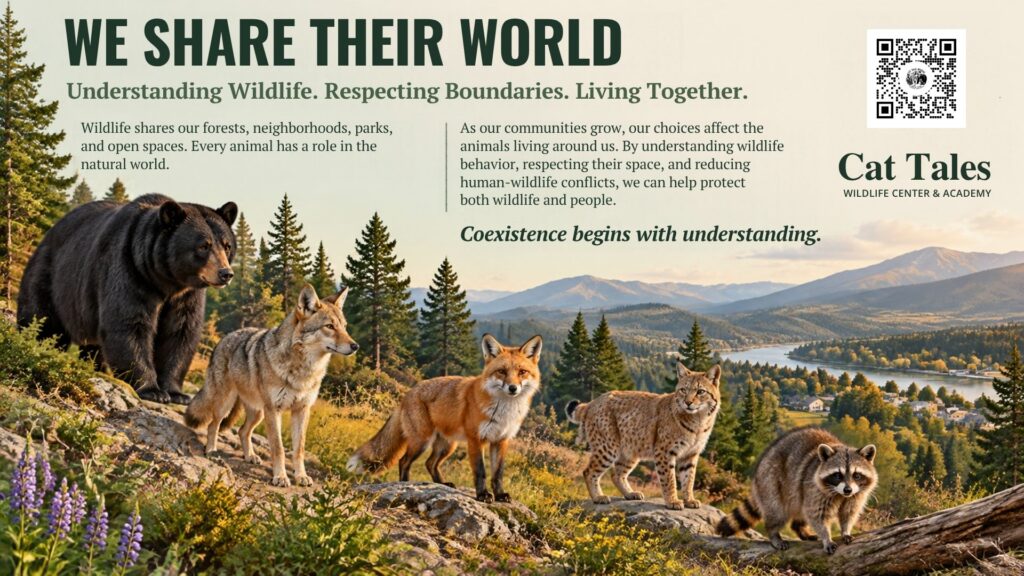
We Share Their World
Wild animals need food, water, shelter, space, and opportunities to raise their young. As human communities grow and change, the places we live and work increasingly overlap with wildlife habitats.
Animals don’t recognize property lines or neighborhood boundaries. They follow opportunities to find the resources they need.
Sometimes those opportunities lead them into human spaces.
Coexisting with wildlife doesn’t mean inviting animals closer or encouraging them to become comfortable around people. It means making thoughtful choices that allow wildlife to remain wild while reducing risks to people, pets, and property.
Sharing space begins with respecting boundaries.
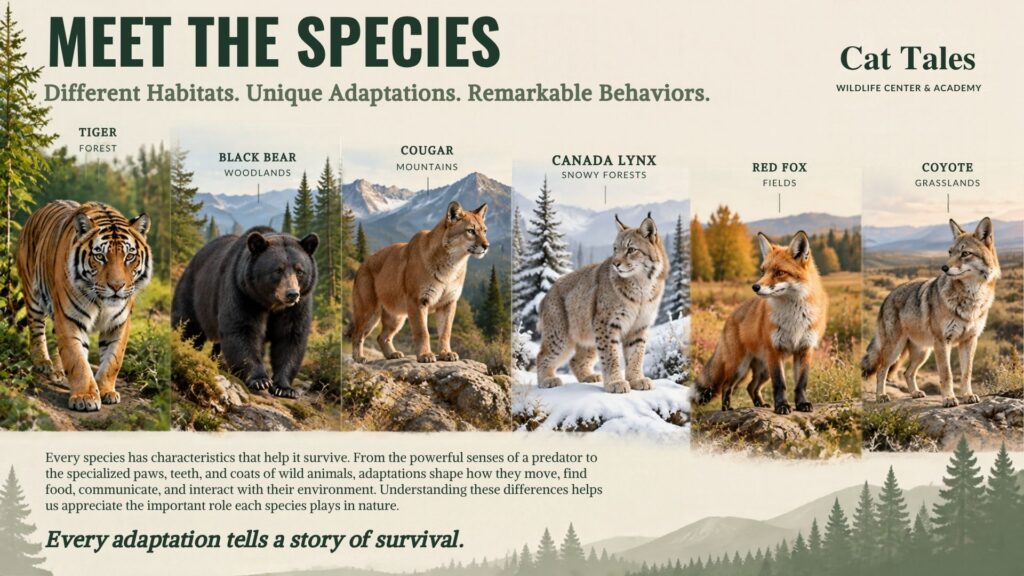
Meet the Species: Every Animal Has a Role
Every species has adaptations that help it survive.
A bobcat’s keen senses and stealth help it hunt. A fox’s hearing allows it to detect small prey. A raccoon’s sensitive front paws help it explore and manipulate objects. A black bear’s powerful sense of smell helps it locate food.
These adaptations influence how animals move through their environments, find resources, communicate, and respond to changing conditions.
Predators, scavengers, herbivores, and other wildlife all contribute to the ecosystems they inhabit.
When we understand what makes each species unique, we begin to appreciate the important role it plays in nature.
Every adaptation tells a story of survival.
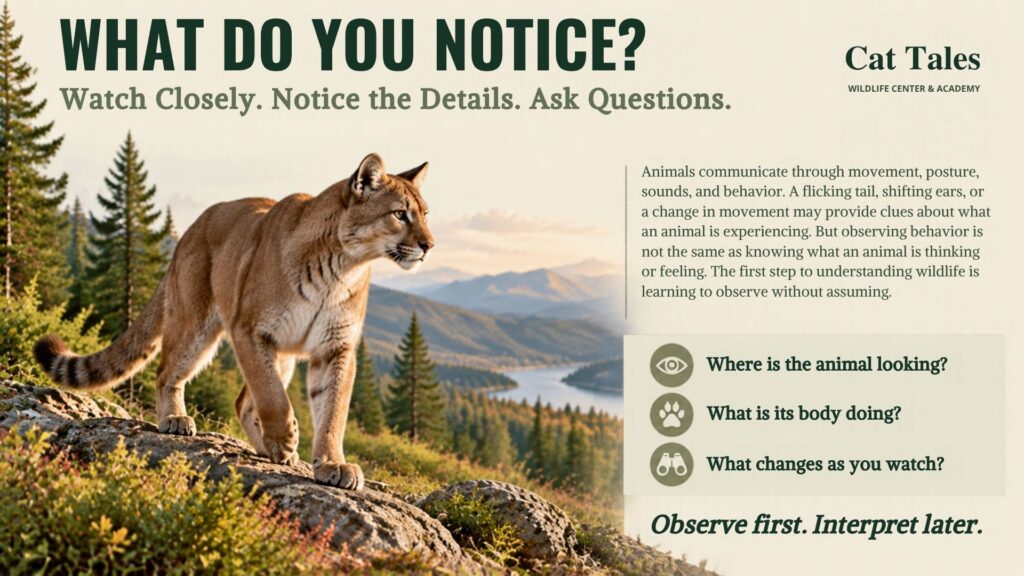
What Do You Notice? Learning to Observe Wildlife
Watching wildlife can be fascinating, but understanding behavior requires more than a quick glance.
An animal may stop and look in one direction. Its ears may move, its body position may change, or it may suddenly become more active.
These are observations.
Deciding whether the animal is angry, frightened, happy, or seeking attention is an interpretation. Sometimes we have enough information to make an informed assessment. Other times, we simply don’t know.
When watching wildlife, ask yourself:
- What is the animal actually doing?
- What is happening around it?
- What changes as I continue watching?
- What do I know, and what am I only guessing?
An animal’s behavior can be influenced by its environment, previous experiences, available resources, and the presence of people or other animals.
Learning to separate observation from assumption helps us become better wildlife neighbors.
Observe first. Interpret later.
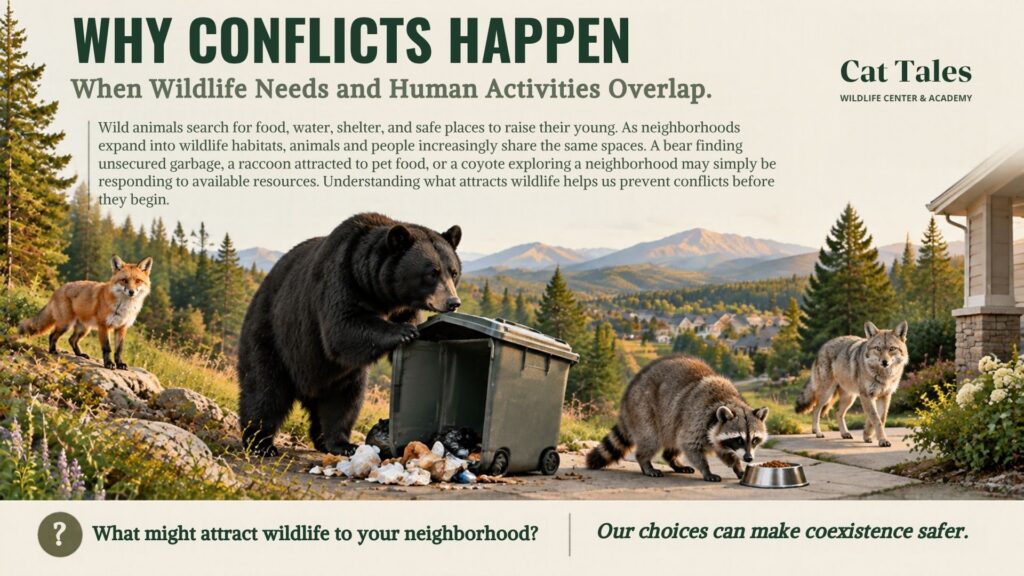
Why Conflicts Happen
Wild animals naturally search for food, shelter, and safe places to live.
Sometimes human activities unintentionally provide those resources.
An unsecured garbage container may attract a black bear. Pet food left outside may encourage raccoons to return. Birdseed, fallen fruit, and other food sources may attract smaller animals and the predators that follow them.
The animal isn’t necessarily doing anything unusual. It may simply be taking advantage of a readily available resource.
Problems can develop when wildlife repeatedly finds food around people or becomes accustomed to approaching homes and other human spaces.
Preventing these situations is often easier than resolving them after a pattern has developed.
Understanding what attracts wildlife allows us to make changes before a conflict occurs.
Our choices can make coexistence safer.
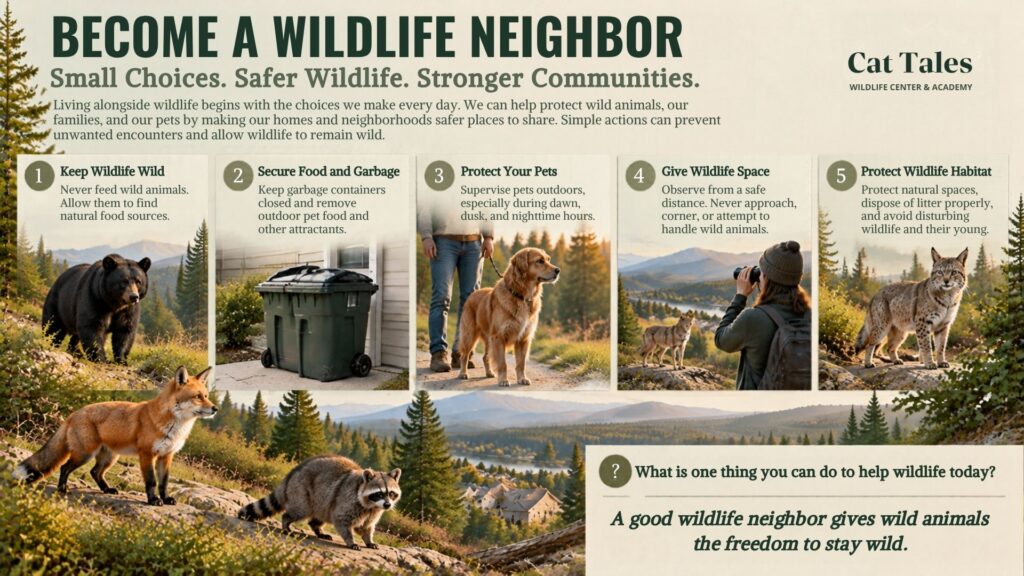
Become a Wildlife Neighbor
You don’t have to live in the wilderness to help protect wildlife. Many of the most important steps begin right at home.
1. Keep Wildlife Wild
Enjoy watching wild animals, but never intentionally feed them.
Human-provided food can change where animals spend their time, encourage repeated visits, and increase the likelihood of unsafe encounters.
Wildlife is best protected when animals continue finding natural food sources and maintain appropriate distance from people.
2. Secure Food and Garbage
Keep garbage containers securely closed and store food attractants where animals cannot reach them.
Feed pets indoors whenever possible, clean outdoor cooking areas, manage fallen fruit, and avoid leaving food scraps outside.
In bear country, use appropriate bear-resistant storage methods and follow local wildlife guidance.
Small changes around your home can make a significant difference.
3. Protect Your Pets
Pets and wildlife don’t always recognize each other’s boundaries.
Keep pets supervised outdoors, use appropriate fencing or enclosures, and follow local leash requirements.
Be especially attentive in areas where coyotes, bobcats, or other predators may be present.
Protecting pets also reduces the possibility of unwanted wildlife encounters.
4. Give Wildlife Space
Observe wild animals from a safe distance.
Never approach, corner, chase, or attempt to touch wildlife. Give animals a clear opportunity to move away.
If you encounter wildlife unexpectedly, remain calm, avoid approaching, and follow species-specific safety guidance.
Different species require different responses. Learning about wildlife common to your area can help you prepare.
5. Respect Wildlife Habitat
Healthy habitats provide food, shelter, and space for wildlife to survive.
Protect natural areas, dispose of litter properly, and avoid disturbing nests, dens, and young animals.
Consider how your landscaping choices, outdoor lighting, and use of shared natural spaces may affect wildlife.
Supporting healthy habitats helps both animals and the communities surrounding them.
What If You Find an Injured or Young Wild Animal?
Our first instinct may be to help, but not every animal that appears alone needs rescuing.
Young wildlife may be left temporarily while parents search for food. Unnecessary movement or handling of an animal can create additional problems.
If you discover wildlife that appears injured, orphaned, or in distress, keep your distance and contact a licensed wildlife rehabilitator or the appropriate wildlife agency for guidance before intervening.
Do not attempt to capture, feed, or care for a wild animal without professional direction.
In Washington, the Department of Fish and Wildlife provides information about injured and orphaned animals and how to locate authorized assistance.
What the Animals at Cat Tales Can Teach Us
Many of the animals at Cat Tales came into human care because circumstances prevented them from living independently in the wild.
Their individual stories offer opportunities to learn about wildlife behavior, adaptations, conservation, and the responsibilities of providing lifelong care.
Although an animal living in a managed environment may behave differently from its wild counterparts, careful observation can help us appreciate the characteristics and capabilities of its species.
A fox investigating a scent, a coyote responding to a sound, or a bear exploring its surroundings can prompt us to ask how animals experience their world.
We may not always know exactly why an animal behaves in a particular way. Recognizing what we don’t know is part of responsible wildlife education.
The goal isn’t simply to admire the animals in our care. It’s about taking what we learn and applying it to the wildlife living beyond our gates.
Coexistence Begins With You
Protecting wildlife isn’t limited to conservation organizations, researchers, or wildlife professionals.
It happens through the everyday decisions of people who share space with wild animals.
By removing food attractants, respecting wildlife boundaries, protecting natural habitats, and learning more about animal behavior, each of us can contribute to safer communities for people and wildlife.
The next time you see a wild animal, take a moment to observe.
What is it doing? What resources might it be seeking? How might your actions affect what happens next?
Understanding leads to respect. Respect leads to responsible choices. And responsible choices make coexistence possible.
Cat Tales Wildlife Center & Academy
Wildlife Rescue. Compassionate Care. Education Ambassadorship.
Learn More About Living With Wildlife
For additional information and species-specific guidance, explore these resources: