
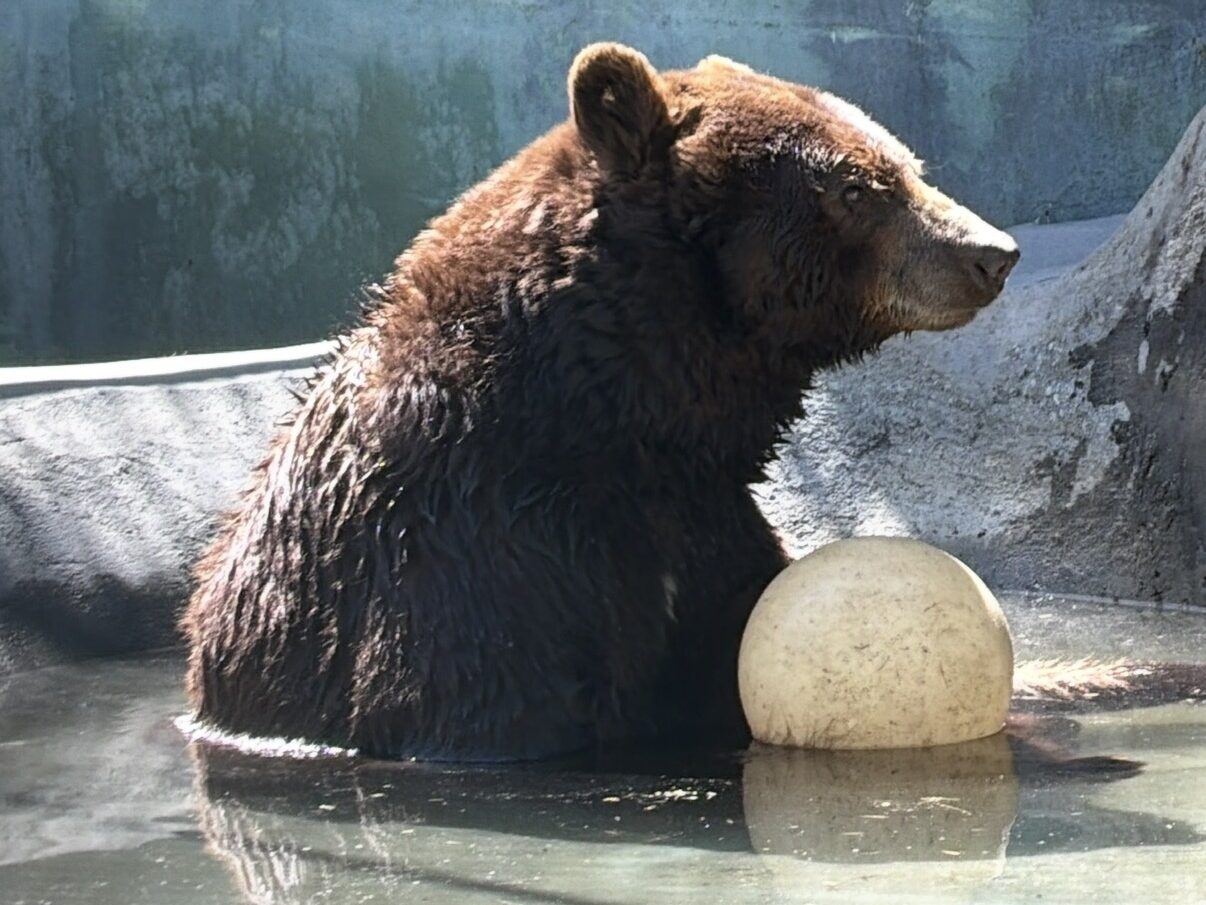
Meet Our Black Bear Ambassador
Black bears are intelligent, powerful, and deeply curious animals. At Cat Tales Wildlife Center, our black bear helps visitors connect with one of North America’s most recognizable wild species while learning about lifelong care, animal behavior, and responsible wildlife education.
Black bears are often familiar to people through stories, parks, or regional wildlife sightings, but many people do not fully understand their behavior, natural adaptations, or the challenges they face when living too close to people.
At Cat Tales, our black bear serves as a wildlife ambassador. By meeting him, visitors gain a deeper appreciation for black bears as wild animals and learn why respect, education, and safe boundaries matter.
About Black Bears
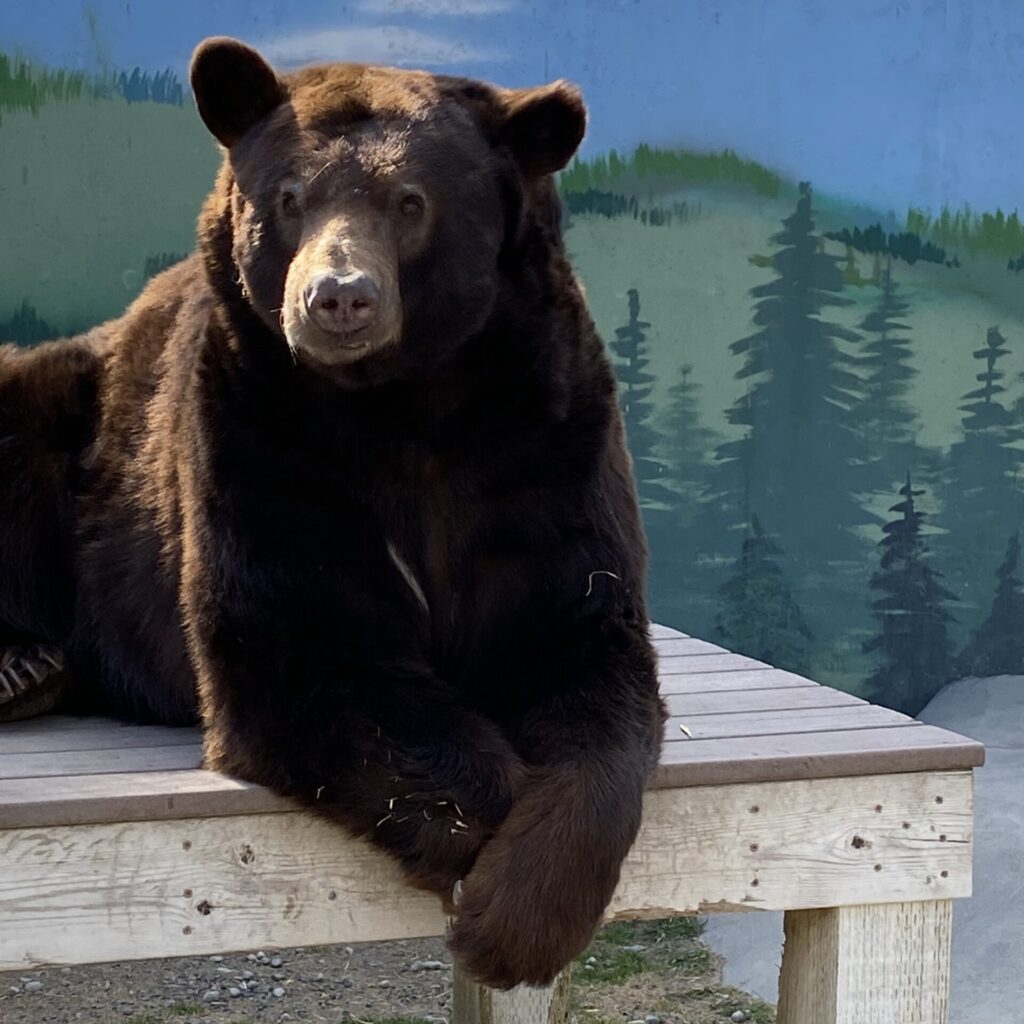
Black bears are the most common and widely distributed bear species in North America. Despite their name, black bears can be black, brown, cinnamon, or even blond in color.
In the wild, black bears are highly adaptable. They live in forests, mountains, swamps, and other habitats, and they are skilled climbers, strong swimmers, and excellent problem-solvers. They are omnivores, meaning they eat a wide variety of foods including plants, berries, insects, fish, and small animals.
Black bears play an important role in their ecosystems. They help spread seeds, turn over soil, and influence the habitats around them. At Cat Tales, our black bear helps visitors better understand the natural behaviors and needs of this remarkable species.

Meet Oscar
Oscar is our black bear ambassador and a longtime resident at Cat Tales Wildlife Center. He was born on February 20, 2003, and is known for his large presence, his intelligence, and his unmistakable bear personality.
Oscar is a cinnamon-colored black bear, which often surprises visitors who expect all black bears to be black. His color is a great reminder that black bears come in a range of natural shades.
Like many bears, Oscar is observant, food-motivated, and highly aware of his surroundings. Visitors may see him exploring his habitat, relaxing in a favorite spot, engaging with enrichment, or watching the activity around him.
As an older bear, Oscar’s care is designed around his comfort, health, and individual needs. His story helps visitors understand both the strength and the sensitivity of bears, especially as they age.
How We Care for Black Bears
Caring for a black bear requires experience, attention to detail, and a deep respect for the needs of a large, intelligent wild animal.
Oscar’s care includes:
- A carefully prepared diet based on his age, health, and nutritional needs
- Daily observation by trained animal care staff and students
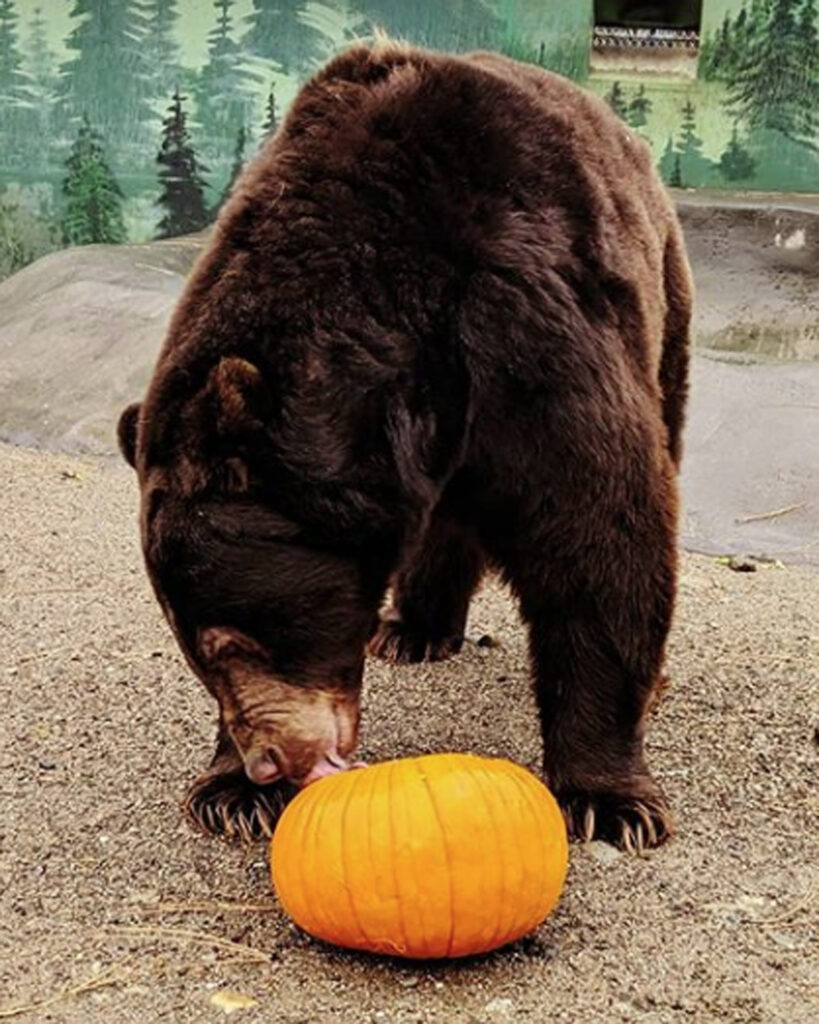
- Enrichment that encourages natural behaviors such as foraging, exploration, scent investigation, and problem-solving
- Protected-contact care routines that keep both Oscar and his caregivers safe
- Veterinary care, wellness monitoring, and age-appropriate support
- Habitat maintenance, shade, bedding, climbing features, and seasonal comfort
Like all animals at Cat Tales, Oscar receives individualized care based on who he is, not just his species.
Why Black Bears Matter
Black bears are an important part of North American ecosystems, but they are also one of the species most likely to come into conflict with people. When bears find access to garbage, pet food, bird seed, or unsecured outdoor food sources, they can become too comfortable around humans.
Education is a key part of bear conservation. Helping people understand how to prevent conflict, respect wildlife, and avoid attracting bears is one of the best ways to protect both bears and communities.
Oscar helps visitors see black bears not as cartoon characters or backyard curiosities, but as powerful, intelligent wild animals deserving of respect.
Seasonal Changes and Bear Behavior
One of the most interesting things about black bears is how much their behavior changes with the seasons. During colder months, bears become less active and may enter a state called torpor. Torpor is different from true hibernation. A bear’s body slows down, but it can still wake more easily and respond to changes in its environment.
Visitors often enjoy learning how seasonal behavior, appetite, coat condition, and activity levels can change throughout the year. These natural rhythms are part of what makes bears so fascinating to observe.
Visiting Oscar
Oscar is often a favorite stop for visitors, but every day is a little different. Depending on the weather, time of day, and his own preferences, he may be resting, exploring, interacting with enrichment, or simply observing the world around him.
The best visits happen when guests slow down and watch for details: a sniff of the air, a shift in posture, a quiet investigation of enrichment, or a relaxed rest in a shaded area.
Every visit offers a chance to better understand this remarkable animal.
Support Black Bear Care
Your support helps provide food, veterinary care, enrichment, habitat maintenance, and lifelong care for Oscar at Cat Tales Wildlife Center.
When you sponsor the black bear, donate, become a member, or visit the sanctuary, you help care for a remarkable wildlife ambassador and support education that helps people better understand bears and responsible wildlife care.
Your sponsorship helps care for these wildlife ambassadors every day. Choose a one-time sponsorship to make an immediate impact, or become a monthly sponsor to provide steady support for food, veterinary care, enrichment, habitat maintenance, and lifelong sanctuary care.
Frequently Asked Questions
Is Oscar really a black bear if he is brown?
Yes. Black bears can be black, brown, cinnamon, or even lighter shades. “Black bear” refers to the species, not always the color.
Do black bears hibernate?
Black bears enter a seasonal state called torpor. Their bodies slow down during colder months, but they are not the same as deep hibernators and can wake more easily.
What do black bears eat?
Black bears are omnivores. In the wild, they eat a variety of foods including plants, berries, insects, nuts, fish, and other available food sources. At Cat Tales, Oscar receives a carefully prepared diet based on his individual nutritional needs.
Can I see Oscar when I visit?
Many visitors are able to see Oscar during their visit, but what he is doing depends on the weather, the season, the time of day, and his own individual choices.
Why can’t Oscar live in the wild?
Animals living at Cat Tales require lifelong human care and a secure habitat. They depend on trained caregivers, appropriate diets, enrichment, and veterinary support.
How does my visit or sponsorship help?
Admission, memberships, sponsorships, and donations help support daily animal care, food, enrichment, veterinary needs, habitat maintenance, and the education mission of Cat Tales Wildlife Center.