


Foxes – Red, Silver, and Arctic
(Vulpes vulpes & Vulpes lagopus)
Clever, curious, and endlessly expressive, foxes have long captured the imagination of people around the world. At Cat Tales Wildlife Center, our fox residents—Todd, Trixie, Kali, Jasper, Jinx, Buddy, and Jovie—represent three unique species and color variations: the red fox, the silver fox, and the arctic fox.
Though many see them as “cute” or “pet-like,” foxes are wild animals with strong instincts that make them challenging and often illegal to own. Their intelligence, scent-marking, and territorial behaviors are best suited to natural settings, not households. At Cat Tales, each fox serves as an ambassador for responsible wildlife understanding—helping visitors see beyond appearances to appreciate the real wild within.
Why Foxes Don’t Make Good Pets
Despite their charm, foxes require specialized care and freedom to express natural behaviors like digging, scent marking, and hunting play.
All About Foxes
The red fox is the most widespread carnivore on Earth, thriving from woodlands to farmlands—and even suburbs. Their reddish coats, white-tipped tails, and expressive faces make them instantly recognizable, though color can vary dramatically: some are brown, silver, or black.
- Diet: Omnivorous; they eat small mammals, birds, fruits, and insects.
- Adaptability: Red foxes thrive near humans due to intelligence and resourcefulness.
- Communication: They can produce over two dozen vocal sounds, including barks, whines, and high-pitched screams.
A melanistic variation of the red fox, the silver fox displays dazzling fur tones—from dark charcoal to shimmering silver. Once highly sought after in the fur trade, silver foxes are now protected ambassadors at Cat Tales, representing the beauty and diversity within their species.
Built for survival in extreme cold, the arctic fox endures temperatures as low as –58°F thanks to its dense fur and compact body. Their seasonal coats change from white in winter to smoky gray-brown in summer for camouflage.
- Habitat: Arctic tundra and coastal ice regions.
- Diet: Rodents, birds, fish, and scavenged remains from polar bear kills.
- Adaptations: Furry paws for insulation, short ears and muzzle to conserve heat, and tails used as blankets for warmth.
Meet Our Foxes
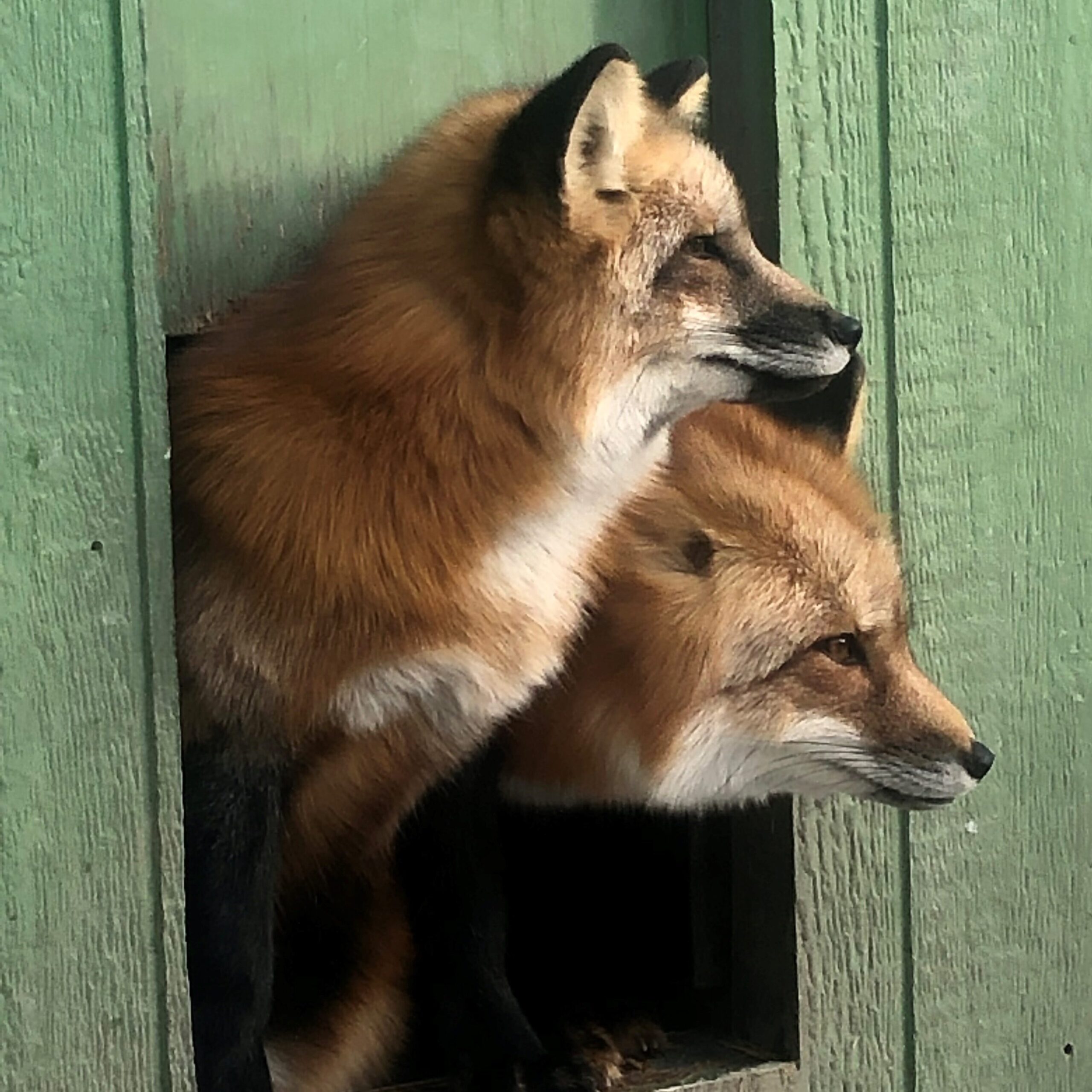
Born April 6, 2019, Todd and Trixie are a lively brother-sister duo who never fail to entertain. Todd, with his classic orange coat, and Trixie, with her darker markings, spend their days digging, climbing, and playfully squabbling—especially at mealtime, when Trixie insists on “ladies first.”
Their interactions demonstrate natural fox hierarchy, communication, and problem-solving. Observing them helps guests understand how complex these small canines truly are.
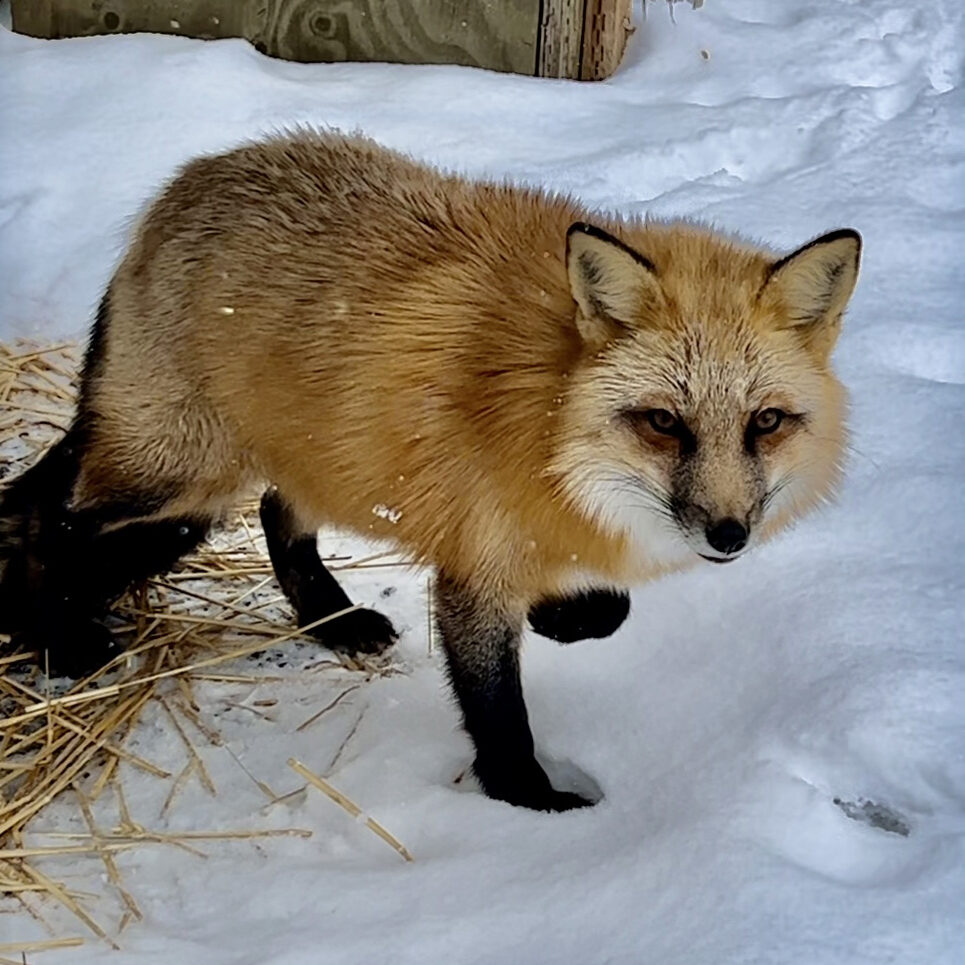
Born March 30, 2018, Kali—short for Kalispell—was found as a young kit and brought to Cat Tales with coyote pups of a similar age. But Kali quickly showed her independent streak, preferring solitude over company.
Now fully grown, she thrives in her own space, playing, climbing, and burying treasures to rediscover later. Missing a toe on her right paw doesn’t slow her down—she’s agile, curious, and endlessly entertaining to watch.
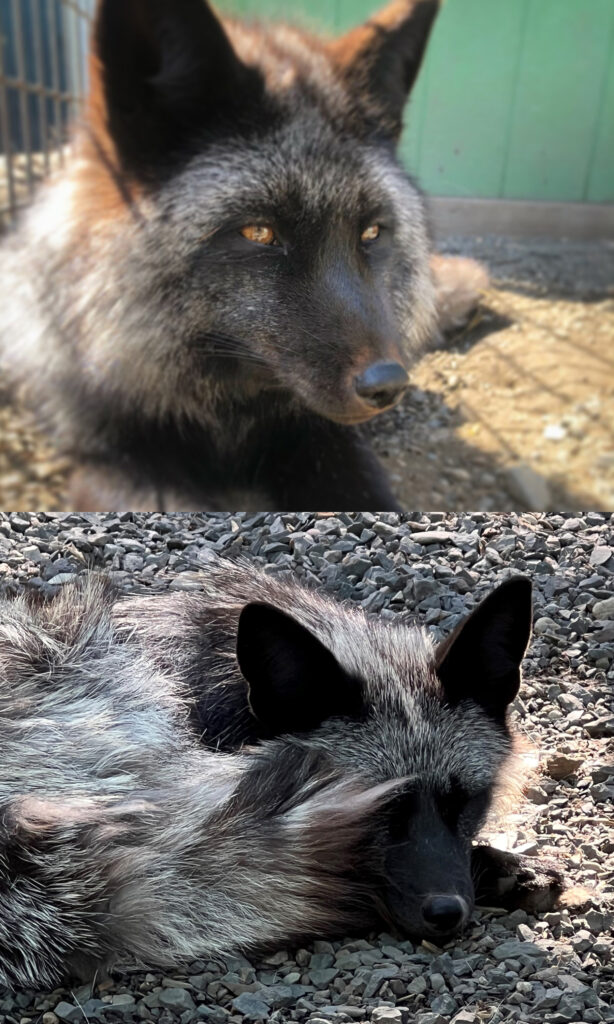
Arriving in June 2019, Jasper and Jinx are silver foxes—melanistic red foxes whose striking coats shimmer with shades of black, gray, and silver.
- Jasper is the inquisitive one, often perched on high platforms watching the world around him.
- Jinx, almost entirely silver, is the more vocal brother, often “gekkering” (making sharp barking sounds) to express excitement or curiosity. Despite a leg deformity, Jinx moves and plays comfortably, enjoying every enrichment opportunity.
These two are inseparable, showing the bond and social intelligence foxes maintain even in sanctuary life.
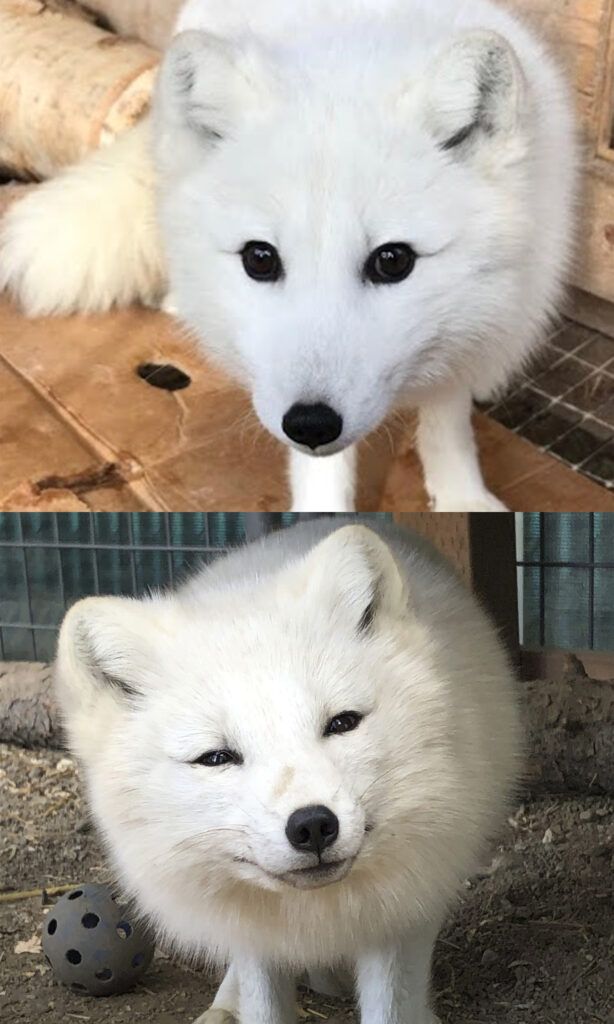
Born June 2019 and arriving in March 2020, Buddy and Jovie are the smallest foxes at Cat Tales—but their personalities are larger than life. When they arrived, they wore full white winter coats; by summer, their fur transformed into soft brown-gray camouflage.
Though hard to tell apart, each has unique traits: Buddy is partially deaf, while Jovie is cross-eyed—neither condition slows them down. They are playful, alert, and perfectly adapted to cold weather, teaching guests about the remarkable resilience of Arctic wildlife.
Conservation & Coexistence
Foxes are listed as species of Least Concern, thanks to their adaptability. However, habitat loss, vehicle collisions, and illegal pet trade continue to threaten individual animals. Cat Tales helps counter these threats through public education, showing that foxes are not nuisances—but vital links in local ecosystems.
Visitors who meet our foxes leave with a new appreciation for the complexity of these clever canids—and for the sanctuaries that protect them.
Life at Cat Tales
Our fox habitats are designed to reflect natural environments, with room to dig, climb, and explore.
- Enrichment: Hidden treats, scent trails, and toys encourage natural foraging behaviors.
- Seasonal Changes: Arctic foxes’ coats transform with the seasons, while red and silver foxes adjust their activity levels to Spokane’s climate.
- Behavioral Observation: Staff track vocalizations, digging habits, and play behaviors to ensure every fox receives proper stimulation and care.
How the Foxes Inspire
Education
Each fox serves as an ambassador, helping visitors understand animal behavior, adaptation, and the ethical considerations of wildlife care.
Advocacy
Their stories encourage respect for wild species and highlight the importance of laws that protect animals from exploitation.
Research & Welfare
By documenting enrichment responses and social interactions, keepers help improve care standards for small canids in sanctuaries worldwide.