
What to Know Before You Buy, Rescue, or Bring One Home
Videos of raccoons opening cabinets, foxes playing with toys, or bobcats interacting with people can make wild animals look surprisingly appealing as pets. You may even find breeders or sellers online offering animals that were born in captivity.
But before purchasing, adopting, rescuing, or bringing a wild animal into Washington, there is an important question to ask:
Is it legal to own that animal here?
For many native wildlife species, the answer for an ordinary person wanting an animal as a pet is no — or ownership is restricted enough that you should never assume an animal is legal simply because someone is willing to sell it.
Washington regulates wildlife differently from domestic animals such as dogs, cats, horses, and livestock. The rules are intended to address wildlife conservation, disease control, public safety, animal welfare, and the risk of captive animals escaping or being released.
Different species may be prohibited for different reasons.
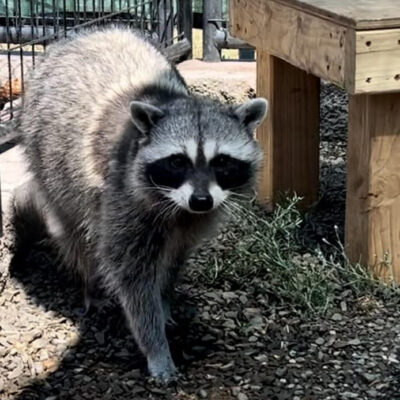
Raccoons and Foxes: A Public Health Restriction
Washington has particularly clear restrictions involving several mammals associated with rabies.
State public-health rules prohibit people from acquiring, selling, bartering, exchanging, giving, purchasing, distributing, or trapping to retain a:
- raccoon
- fox
- coyote
- skunk
- bat
There are limited exceptions for organizations or individuals operating under appropriate authority, such as zoological parks, animal exhibitors, research facilities, and wildlife rehabilitators.
Washington also restricts the importation of these species into the state.
This means buying a captive-bred fox or raccoon from a breeder in another state does not automatically make the animal legal in Washington.
Why does rabies matter?
Wild mammals can carry diseases that affect people, domestic animals, and other wildlife. Rabies is especially significant because once clinical symptoms develop, the disease is almost always fatal.
Domestic dogs, cats, and ferrets have established vaccination protocols. Wildlife presents a different regulatory situation, which is one reason Washington places additional restrictions on species considered rabies vectors.
The rule is not based on whether an individual animal appears healthy or friendly. It addresses the risk associated with the species as a whole.
What About Bobcats?
Bobcats are also regulated wildlife in Washington.
Washington classifies bobcats as both game animals and furbearing animals, along with species such as raccoons and foxes.
State law also says that a person may not simply take a live wild animal and keep it. Taking live wildlife from the wild generally requires authorization from the Washington Department of Fish and Wildlife.
This is an important distinction because people sometimes assume that finding an orphaned baby animal gives them the right to raise it.
It does not.
Washington’s regulations concerning captive wildlife also require that wildlife held in captivity be lawfully acquired, and that the person possessing it document the animal’s species, age, sex, origin, source, date of acquisition, and any previous transfers.
Because wildlife regulations can differ by species and by how an animal was acquired, anyone considering a bobcat or another wild species should obtain confirmation directly from WDFW before purchasing or accepting the animal.
A seller saying, “It’s legal because it was captive bred,” is not enough.
Native Wildlife Does Not Become Domestic Because It Was Raised by People
One of the most common misunderstandings involves the word tame.
A raccoon raised from infancy may become accustomed to people. A fox may willingly approach its caretaker. A bobcat may learn household routines.
That does not make the animal domesticated.
Taming happens to an individual animal. Domestication occurs through many generations of selective breeding.
Dogs and domestic cats have undergone that process. Bobcats, raccoons, coyotes, and native foxes have not.
Their behavior may therefore change substantially as they mature.
An animal that was manageable at three months old may behave very differently at one, two, or five years old.
Why Does Washington Regulate Native Wildlife?
There isn’t one single reason. Several concerns overlap.
Protecting wild populations
Wildlife belongs to the public trust and is managed by the state rather than functioning as an unregulated source of pets.
Allowing people to freely capture young wildlife could affect populations and encourage people to remove animals that were never actually abandoned.
A young wild animal alone is not necessarily orphaned. Its mother may simply be away feeding or waiting for people to leave.
Disease prevention
Wildlife can carry diseases or parasites that can affect humans, pets, livestock, or other wildlife.
Washington’s specific restrictions on raccoons, foxes, coyotes, skunks, and bats reflect this public-health concern.
Disease regulation also matters when animals are transported across state lines because an animal can introduce pathogens into a population that was not previously exposed to them.
Preventing release of captive wildlife
Another problem occurs when someone purchases a wild animal as a baby and later discovers that keeping an adult wild animal is difficult.
Releasing it outside may seem compassionate.
It may also be illegal.
Washington restricts the release of captive wildlife, and wildlife generally cannot simply be transported somewhere else and turned loose.
A hand-raised animal may also lack the skills necessary to survive successfully in the wild.
Public safety
Wild animals retain the physical abilities and behavioral responses of their species.
That does not mean they are inherently aggressive.
It means their behavior cannot always be evaluated by the same standards used for domestic pets.
Fear, territorial behavior, food competition, sexual maturity, defensive reactions, or frustration can result in biting, scratching, or other behaviors that become much more significant in an adult wild animal.
Animal welfare
Meeting the needs of a wild animal can also be more complicated than it first appears.
Different species may need opportunities to climb, dig, forage, scent-mark, hide, explore, manipulate objects, maintain large territories, or express complex social or solitary behaviors.
Providing food and affection is only part of animal care.
An enclosure that prevents escape may still not provide an appropriate environment for the animal.
“But I Found an Orphan.”
This is probably one of the easiest ways for someone with good intentions to accidentally violate wildlife laws.
If you find a young raccoon, fox, bobcat, squirrel, bird, deer, or other wild animal, do not automatically assume that it needs to be rescued.
Whenever possible:
- Leave the animal where it is unless it is in immediate danger.
- Observe from a distance.
- Keep people and pets away.
- Contact WDFW or a licensed wildlife rehabilitator for instructions.
Wildlife rehabilitation requires permits and specialized training. Its objective is normally to treat and raise wildlife so that animals capable of surviving independently can be returned to the wild.
A wildlife rehabilitation permit is not a permit to turn wildlife into pets.
“But Someone Online Is Selling Them.”
This is another situation where buyers need to be cautious.
An animal can be legal in one state and prohibited in another.
The fact that:
- a breeder has a website,
- the animal was born in captivity,
- the seller has a USDA license,
- someone else owns the species,
- or the animal can legally be purchased in another state
does not automatically mean that you can legally possess it in Washington.
Federal licenses and state wildlife laws address different things.
Before money changes hands, the buyer should determine whether Washington allows possession of the exact species, whether import permits or health certificates are required, and whether county or city ordinances impose additional restrictions.
What Happens If Someone Possesses Wildlife Illegally?
Consequences depend on the species and circumstances.
Washington wildlife officers have authority to seize wildlife they have probable cause to believe was taken, transported, or possessed illegally.
Certain wildlife-possession violations can also be criminal offenses. For example, knowingly possessing live wildlife in violation of state wildlife laws or department rules can constitute a gross misdemeanor under RCW 77.15.250. The state may also recover costs associated with the capture, control, or otherwise handling of unlawfully possessed or released wildlife.
Other violations may carry different penalties depending on the animal’s legal classification and the circumstances.
The most important practical consequence, however, may be one people do not consider when buying an unusual pet:
You may lose the animal.
Even when someone has raised an animal for years and considers it part of the family, illegal possession does not necessarily create a right to continue keeping it.
That can leave wildlife agencies, veterinarians, rehabilitators, sanctuaries, and the owner trying to determine what can legally and humanely be done with the animal.
What About Bears, Cougars, Wolves, and Other Dangerous Wildlife?
Washington has additional restrictions covering animals classified as potentially dangerous wild animals.
The law prohibits most private ownership of animals including bears, wolves, certain large cats, nonhuman primates, elephants, rhinoceroses, crocodilians, and specified venomous reptiles. Limited exemptions apply to certain qualifying facilities and situations.
These laws are separate from the rules governing raccoons, foxes, bobcats, and many other native species.
That is why asking simply, “Are exotic animals legal in Washington?” does not provide a useful answer.
The species matters.
So does where the animal came from, how it was acquired, and why it is being possessed.
Before You Buy a Wild or Exotic Animal
If you are considering any nondomestic species in Washington, research it before making a deposit or arranging transportation.
Ask:
Is this exact species legal to possess in Washington?
Is it legal to bring it into Washington from another state?
Does WDFW regulate it as wildlife?
Does the Washington Department of Agriculture or Department of Health regulate its movement or possession?
Does my county or city have additional rules?
What documentation must I keep showing where the animal came from?
Can I find a veterinarian who is willing and legally authorized to treat it?
What happens if I can no longer care for it?
That last question deserves particular consideration. A domestic dog or cat can usually be surrendered to a shelter or rescue organization. Placement options for an adult wild animal can be dramatically more limited.
The Bottom Line
Wild animals can be fascinating, intelligent, and highly individual.
That does not necessarily make them legal—or practical—to keep as pets.
In Washington, raccoons and foxes are among the species specifically restricted under public-health regulations. Bobcats and many other native mammals are regulated wildlife, and taking a live animal from the wild to keep is generally prohibited. Other species may fall under additional wildlife, agricultural, public health, or dangerous-animal laws.
If you are considering purchasing a wild or exotic animal, the safest approach is simple:
Check first, buy second.
Do not rely solely on the seller’s interpretation of Washington law.
Contact the Washington Department of Fish and Wildlife and, when appropriate, your local animal-control authority or other state agency before accepting or transporting the animal.
A few questions before bringing an animal home can prevent a much more difficult situation later—for the owner, the authorities, and most importantly, the animal.
This article provides general educational information and is not legal advice. Wildlife laws and local ordinances can change, so prospective owners should verify current requirements with the appropriate Washington agencies.