
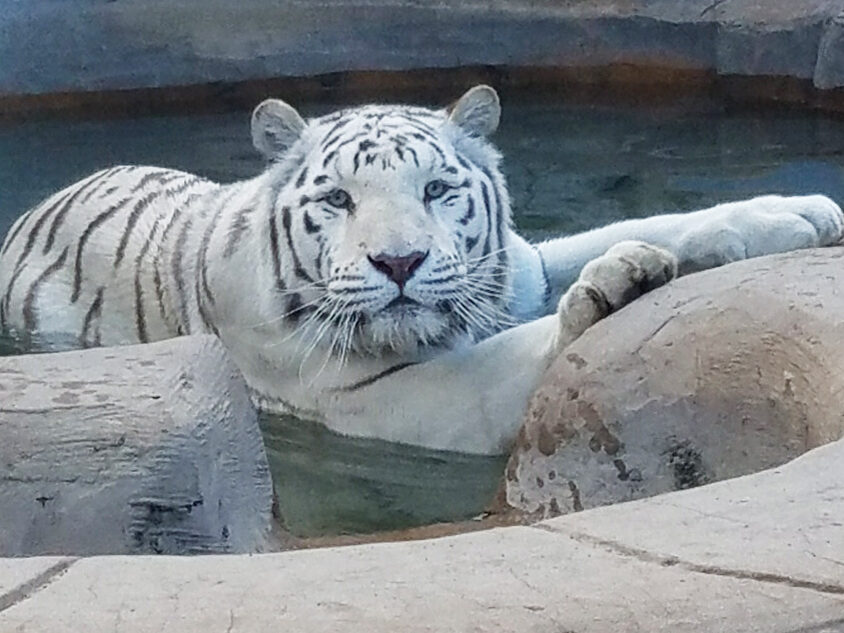
Remembering Nalin
Nalin was a white tiger with a powerful presence and an unforgettable story. During his years at Cat Tales Wildlife Center, he helped visitors learn about tigers, lifelong sanctuary care, animal welfare, and the important difference between conservation and breeding animals for unusual physical traits.
Nalin was born on August 8, 2008, and passed away in July 2026 after an oral sarcoma caused extensive and irreversible damage. When his condition could no longer be managed without compromising his comfort and quality of life, his caregivers made the difficult decision to let him go peacefully.
He was deeply loved by the people who cared for him and by the many visitors, students, volunteers, and supporters who came to know him over the years.
Nalin was the only white tiger at the time to live at Cat Tales after more than 25 years of the organization caring for one or more white tigers. His loss marked the end of an important chapter in Cat Tales’ history, but the lessons he helped teach remain part of our mission.
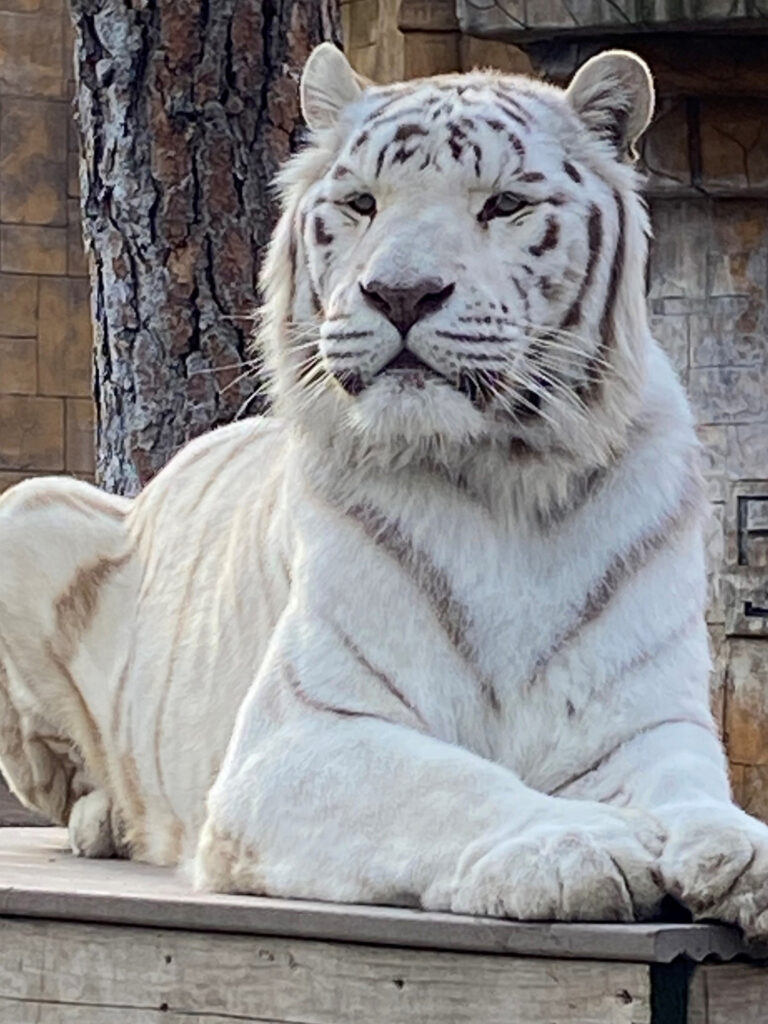
About White Tigers
White tigers are often misunderstood. Their pale coats and blue eyes are striking, but they are not a separate species or a rare wild subspecies. White tigers are Bengal tigers, or Bengal tiger mixes, with a recessive genetic trait that affects coat color.
White tigers are not albino. Their white coat is caused by a genetic variation that reduces pigment but does not remove it completely. This is why white tigers usually retain dark stripes and blue eyes.
White tigers are extremely rare in the wild. Most white tigers living in human care are the result of selective breeding for appearance rather than conservation. Because the white coat trait is recessive, breeding programs focused on producing white cubs have historically relied on close genetic pairings. This can increase the risk of inherited health and welfare concerns.
Nalin gave Cat Tales an opportunity to explain an important distinction: providing responsible lifelong care for an individual white tiger is not the same as supporting the continued breeding of white tigers.
He was valued for who he was as an individual, not simply for the color of his coat.
Nalin’s Story
Nalin was a white Bengal tiger born on August 8, 2008. Before coming to Cat Tales, he lived in a professional animal setting where he participated in public programs. When his previous facility could no longer provide for his long-term needs, Cat Tales became his permanent home.
Nalin was known for his calm confidence, striking appearance, and expressive personality. Visitors often noticed his pale coat first, but those who cared for him knew there was much more to him than his color.
Like every tiger, Nalin had individual preferences, routines, moods, and ways of interacting with the world around him. He could often be seen resting in the shade, watching activity around the sanctuary, exploring his habitat, relaxing near his pool, or participating in enrichment on his own terms.
His care was always built around who he was as an individual tiger, including his age, comfort, health, personality, behavior, and daily choices.
Why Nalin’s Story Matters
Nalin has a permanent place on the Cat Tales website because white tigers raise important questions.
Many visitors want to know whether white tigers are endangered, whether they are albino, why they look different from orange tigers, and whether breeding them contributes to conservation.
Nalin’s story allows Cat Tales to answer those questions honestly while preserving the memory of an animal who played a significant role in the organization’s history.
He was part of the Cat Tales tiger family, and his legacy continues to provide meaningful lessons about genetics, animal welfare, responsible care, and conservation.
Caring for Nalin
Caring for Nalin required daily attention, specialized knowledge, thoughtful observation, and a strong understanding of tiger behavior and safety.
His care included:
- A carefully prepared diet based on his age, health, size, and individual needs
- Daily observation by trained animal care staff and students
- Enrichment that encouraged natural tiger behaviors such as scent investigation, exploration, play, and problem-solving
- Protected-contact care routines designed to keep both Nalin and his caregivers safe
- Veterinary care, wellness monitoring, and age-appropriate support
- Habitat maintenance, shade, bedding, water access, and seasonal comfort
As Nalin aged and his medical needs changed, his care plan changed with him. Decisions were based not only on his diagnosis, but also on his behavior, comfort, quality of life, and the professional judgment of those who knew him best.
That individualized approach is an essential part of lifelong sanctuary care.
Why White Tiger Education Matters
White tigers can inspire wonder, but they can also create confusion. Many people believe they are a separate endangered species that must be bred for conservation.
In reality, protecting wild tiger populations means preserving habitat, maintaining healthy prey populations, reducing human-wildlife conflict, and protecting naturally occurring tiger populations in Asia.
Conservation is not about producing animals with unusual appearances. It is about protecting species and ecosystems in the wild while making responsible, ethical choices for animals in human care.
Through Nalin’s story, Cat Tales can continue to speak honestly about beauty, genetics, selective breeding, animal welfare, and the responsibility involved in caring for large carnivores throughout their lives.
Nalin’s Legacy
For more than 25 years, white tigers were a visible and memorable part of Cat Tales Wildlife Center. They inspired curiosity, encouraged questions, and helped generations of visitors learn more about tigers and the realities of caring for exotic animals.
Nalin carried that legacy through the final years of this chapter.
His life cannot be measured only by the number of people who saw him or by the beauty that first drew their attention. His legacy lives in the students who learned to observe him carefully, the caregivers who adapted to his changing needs, the visitors who left with a better understanding of white tigers, and the many people who supported his lifelong care.
Although visitors may no longer see a white tiger at Cat Tales, Nalin and the white tigers who came before him will always remain part of the organization’s history.
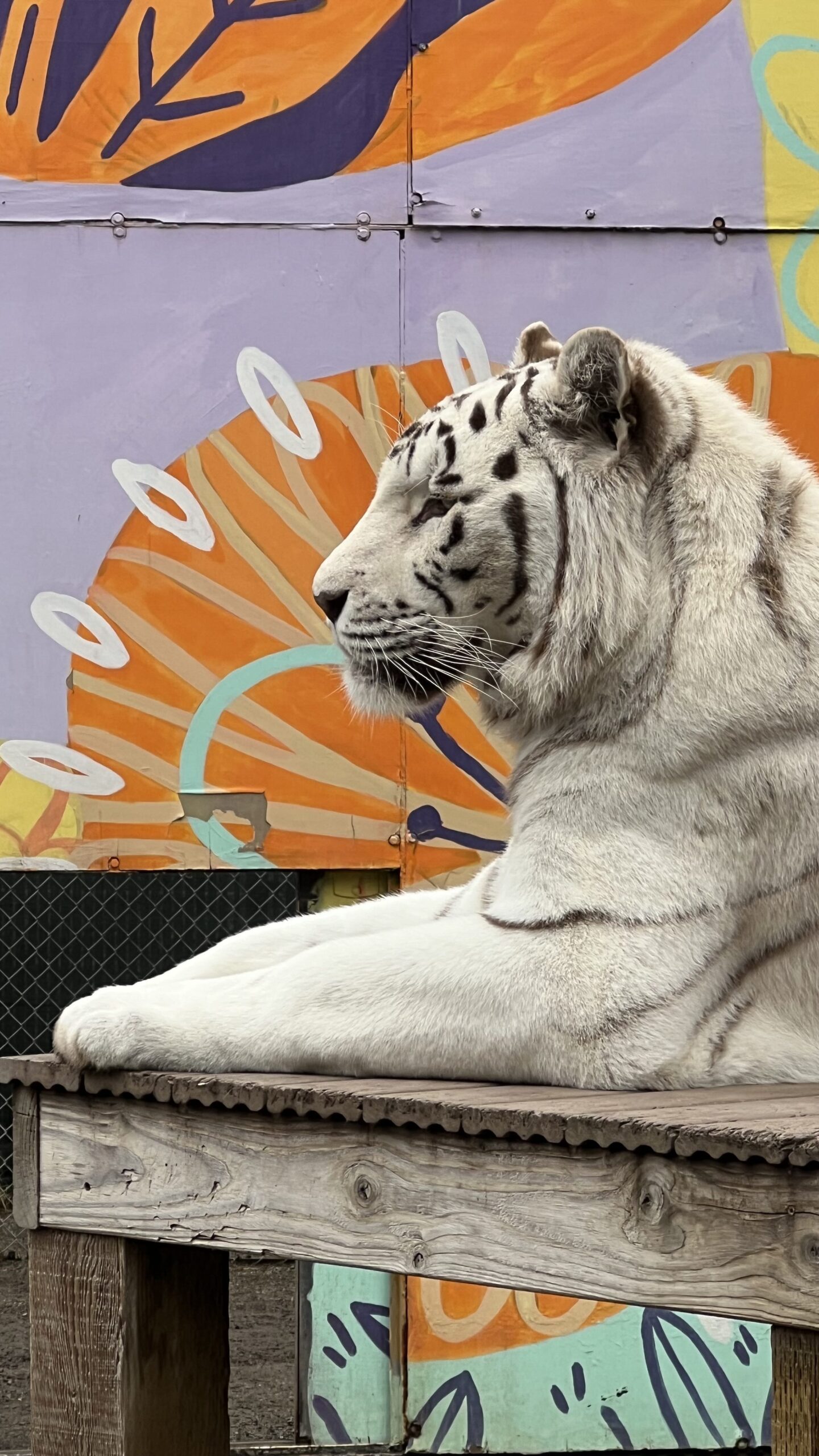
Support Lifelong Animal Care
Your support helps provide food, veterinary care, enrichment, habitat maintenance, and lifelong care for the animals who call Cat Tales Wildlife Center home.
When you donate, become a member, sponsor a species, or visit the sanctuary, you help provide individualized care for remarkable animals while supporting education about wildlife, conservation, animal behavior, and responsible sanctuary care.
Nalin’s life was made possible by years of dedicated care and by the people who believed that every animal deserves dignity, comfort, and compassionate support throughout every stage of life.
Your support helps Cat Tales continue that promise for the animals who remain in our care.