
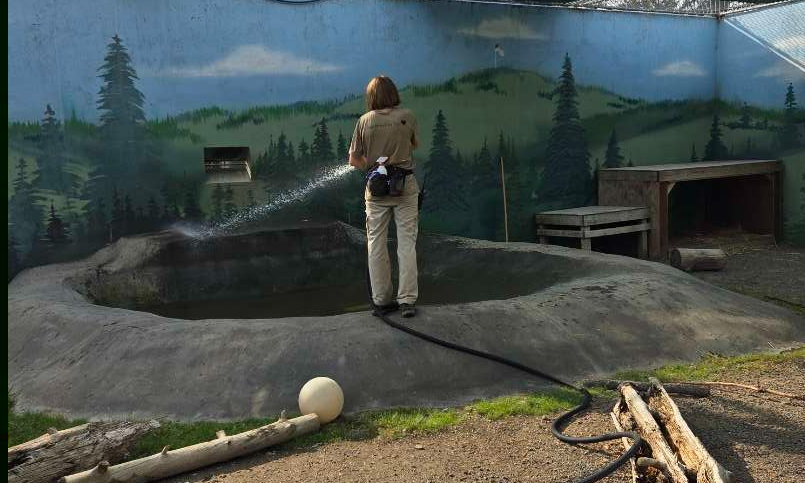
Before the gates open each morning at Cat Tales Wildlife Center, the workday is already underway.
Animals are being observed. Water is being refreshed. Diets are being prepared. Habitats are being checked and cleaned. Enrichment is being planned. Someone is paying attention to whether an animal ate normally, moved comfortably, responded as expected, or simply seemed a little different than usual.
So who cares for the animals?
At Cat Tales, the answer includes experienced staff and students enrolled in the Cat Tales Wildlife Academy, where future animal care professionals learn by taking an active role in the daily work of a wildlife facility under staff guidance.
For these students, school looks very different from a traditional classroom.
Animal Care Starts With the Everyday Work
People who dream about working with wildlife often imagine the memorable parts of the job: training an animal, preparing enrichment, assisting with a veterinary procedure, or developing a relationship with an individual animal.
Those experiences can certainly be part of professional animal care.
But the foundation of the job is much more routine.
Every day, animals need fresh water, appropriate diets, clean and safe habitats, observation, enrichment, and consistent care. Those responsibilities do not disappear because it is raining, snowing, hot, cold, a holiday, or simply a very busy day.
Wildlife Academy students learn that caring for animals means showing up for the ordinary work as well as the exciting moments.
That lesson is fundamental.
The animals depend on their caretakers whether the work is exciting or not.
What Does a Wildlife Care Student Actually Do?
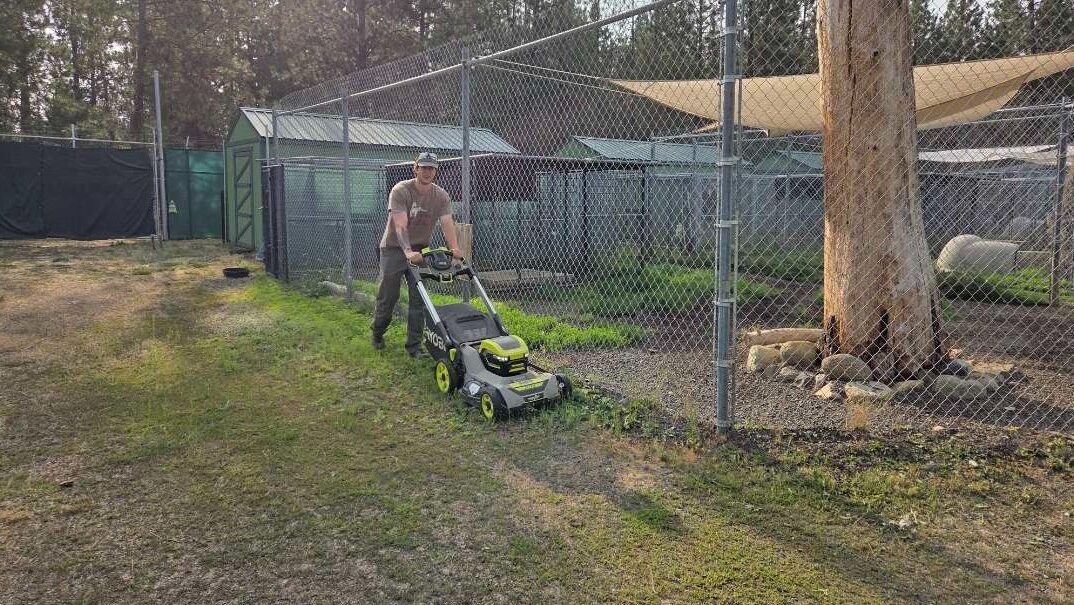
Students in the Cat Tales Wildlife Academy Zookeeping & Wildlife Management program gain practical experience by participating in the facility’s regular operations.
Depending on their level of training and assigned responsibilities, that may include:
- observing animals and reporting changes
- cleaning and maintaining animal areas
- refreshing water
- assisting with diet preparation and feeding routines
- preparing and providing enrichment
- learning safe work practices around wildlife
- maintaining equipment and work areas
- developing professional communication and teamwork skills
- learning how behavior and physical condition can change from one day to the next
Each task may appear straightforward on its own.
The real learning comes from understanding why it matters.
Cleaning Is Also Observation
Cleaning an animal habitat is not simply a housekeeping task.
It is also an opportunity to gather information.
A caretaker may notice how much food was eaten, where an animal spent time, whether water consumption appears different, what the feces look like, whether enrichment was used, or whether something in the habitat needs repair.
Students begin learning to look beyond the immediate assignment.
Instead of simply asking, “Did I clean the area?” they learn to ask:
What did I notice while I was here?
That shift in thinking is an important part of becoming an animal care professional.
Feeding Is More Than Putting Food in a Bowl
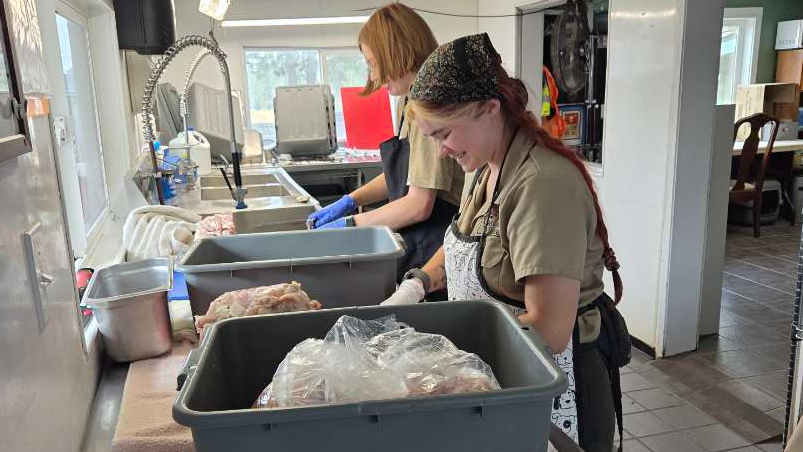
Diet preparation also requires attention and accuracy.
Different animals have different dietary needs, and individual animals may have specific amounts, schedules, supplements, medications, or feeding routines.
Students learn that preparing food correctly is part of animal health care.
They also learn to pay attention to what happens afterward.
Did the animal approach the food normally? Did it eat everything? Did it take longer than usual? Did it leave something it normally eats first?
A simple feeding routine can provide valuable information when the person providing the care knows what to watch for.
Enrichment Has a Purpose
Enrichment is another part of animal care that can easily be misunderstood.
It is not simply giving an animal something entertaining.
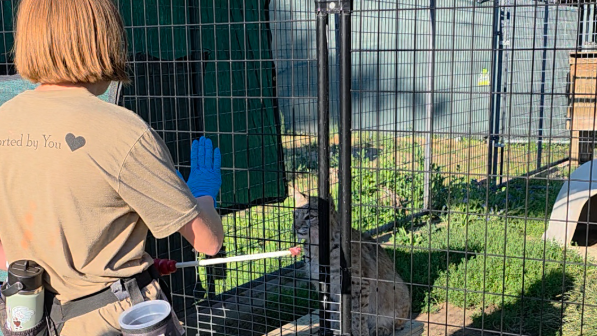
Good enrichment encourages natural behavior, provides opportunities for choice, creates appropriate physical or mental challenges, and helps animals interact with their environment in meaningful ways.
Students learn to consider the species, the individual animal, safety, and the goal of the enrichment before deciding what to provide.
They also learn to observe the animal’s response.
One animal may investigate immediately.
Another may watch from a distance first.
A third may ignore the enrichment completely.
None of those responses automatically mean the enrichment succeeded or failed. They are information.
And learning to gather that information is part of the educational process.
The Animals Are Teachers, Too
A textbook can explain the natural history of a tiger, puma, bobcat, lynx, fox, wolfdog, bear, or serval.
It can describe typical behavior, diet, habitat, physical adaptations, and natural instincts.
But the animal standing in front of a student teaches something a textbook cannot.
Individuals are different.
One puma may approach an activity immediately while another chooses to watch before responding.
One fox may investigate a new object without hesitation while another needs additional time.
An animal that is normally active may spend an unusually quiet morning resting. Another animal may behave exactly the same way and be completely normal.
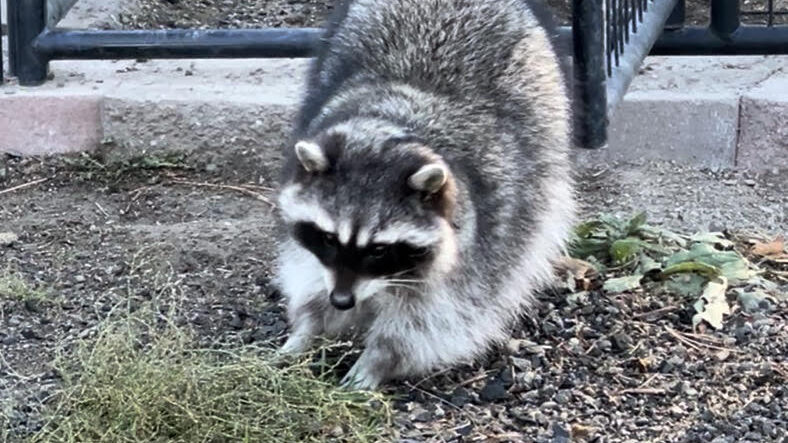
Students gradually learn that knowing a species is important, but knowing the individual animal is equally important in day-to-day care.
Learning What “Normal” Looks Like
One of the most valuable skills in animal care is recognizing change.
That is only possible when caretakers first understand what is normal for the animal.
How does this individual normally move?
Where does the animal usually rest?
How quickly does it approach food?
How does it respond when a familiar caretaker arrives?
What posture does it typically use when relaxed, alert, uncertain, or excited?
These details may seem small.
Over time, however, repeated observation creates a baseline.
When something changes, an attentive caretaker is more likely to notice.
Students learn that observation does not mean simply looking at an animal. It means learning to see patterns, recognize changes, and clearly communicate what they observe.
Professional Animal Care Requires Responsibility
Working with wildlife carries responsibilities that extend well beyond a love of animals.
Students must learn safety, reliability, communication, sanitation, teamwork, professionalism, and attention to detail.
They must learn when to ask questions.
They must learn to follow established procedures.
They must learn that sometimes the most important thing they can do is recognize that something is different and report it to the appropriate person.
And they must understand that animal care is a team effort.
No single person sees everything.
The quality of care depends on people sharing accurate information and working together consistently.
Preparing for Careers in Animal Care
Many students enter wildlife programs because they know they want to work with animals but have limited understanding of what the profession actually involves.
Hands-on experience changes that.
Students discover whether they enjoy the physical work, early mornings, cleaning, repetition, observation, teamwork, and responsibility involved in animal care.
They also begin developing practical skills that can prepare them for employment in zoos, wildlife facilities, sanctuaries, rehabilitation programs, and other animal-care settings.
Most importantly, they begin learning that professional animal care is not about being close to wildlife.
It is about meeting the animal’s needs.
That distinction matters.
A School and a Sanctuary
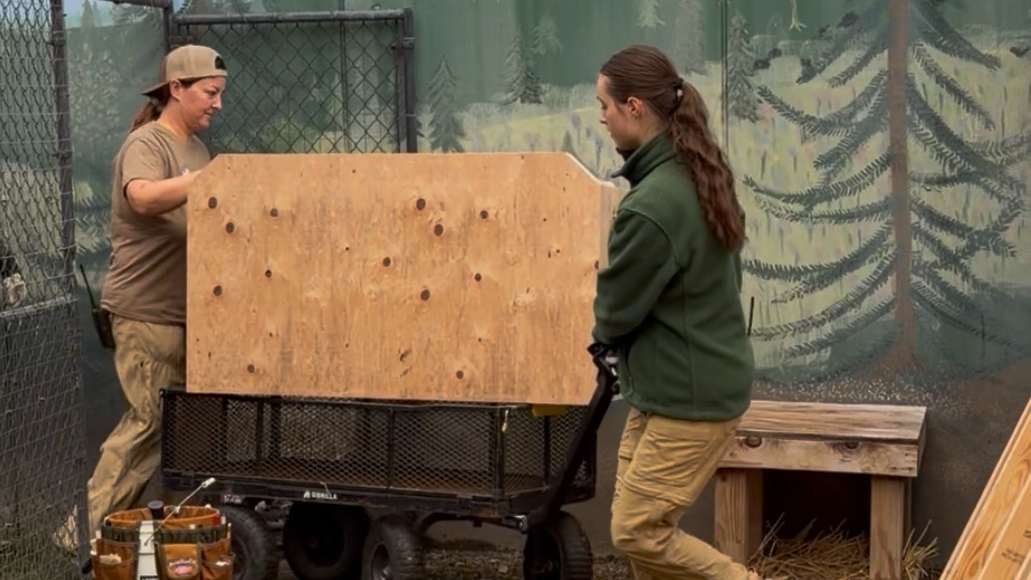
Cat Tales has a unique relationship between its wildlife sanctuary and its vocational school.
The animals receive daily care.
Students receive practical experience.
And the learning happens through the real responsibilities involved in operating a wildlife facility.
The students help care for the animals, but the animals also help shape the students.
Every habitat cleaned, every diet prepared, every behavior observed, and every question asked becomes part of that education.
By the time a student moves forward into a professional animal care career, the hope is that they leave with more than technical skills.
They leave understanding that good animal care requires patience, consistency, humility, observation, and respect for the individual animal.
So who cares for the animals at Cat Tales?
A dedicated team does.
And among that team are students learning, one day at a time, what it truly means to accept responsibility for the care of wildlife.
Interested in a career working with animals?
Learn more about the Cat Tales Wildlife Academy and the Zookeeping & Wildlife Management Certification Program.