

Bobcats at Cat Tales Wildlife Center
Bobcats are intelligent, adaptable, and often misunderstood wild cats. At Cat Tales Wildlife Center, our bobcats help visitors connect with one of North America’s most familiar native felines while learning about lifelong wildlife care, animal behavior, and responsible conservation education.
Many people are surprised to learn how often bobcats are displaced, orphaned, or kept in situations that do not meet their needs. Although they may appear small compared to other wild cats, bobcats are powerful, fast, and very much wild animals.
At Cat Tales, our bobcats serve as wildlife ambassadors. By meeting them, visitors gain a better understanding of bobcat behavior, the challenges these animals face, and why wild animals do not make good pets.
About Bobcats
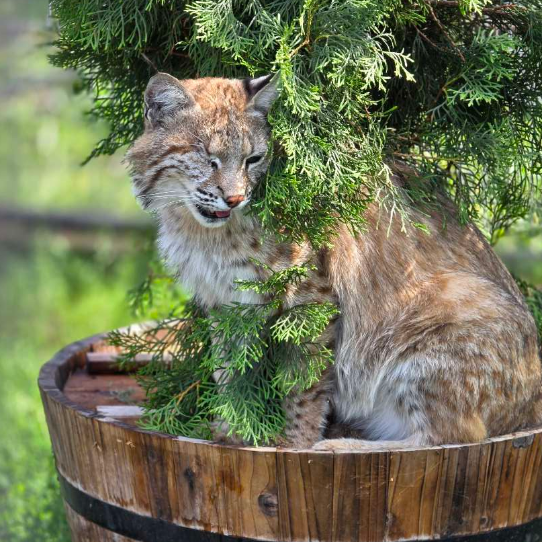
Bobcats are medium-sized wild cats found throughout much of North America. They are known for their spotted coats, short “bobbed” tails, tufted ears, and sharp hunting skills.
In the wild, bobcats are solitary animals that rely on stealth, patience, and agility. They can climb, leap, and move quietly through a wide variety of habitats, including forests, deserts, brushlands, and even areas close to human development.
Bobcats play an important role in their ecosystems by helping manage prey populations. At Cat Tales, our bobcats help visitors appreciate these remarkable cats while also learning about the lifelong commitment required to care for wild animals in human care.
Meet the Residents
Amala
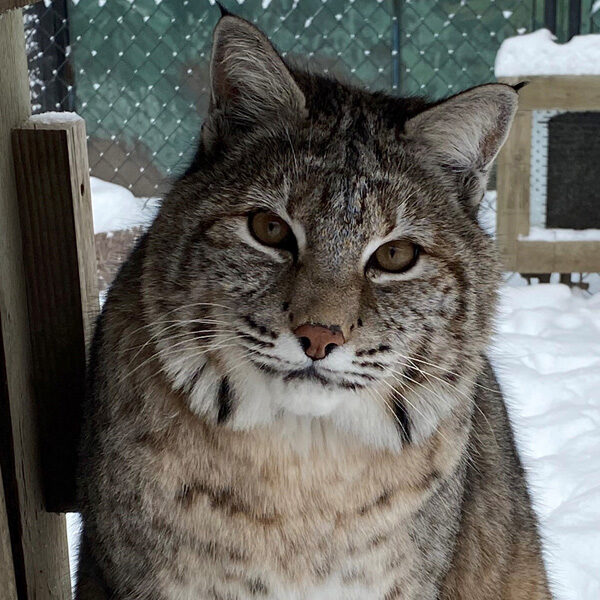
Amala is one of our longtime bobcat residents and a quiet, beautiful ambassador for her species. She has a calm presence and helps guests see that even smaller wild cats have strong instincts, individual preferences, and specialized needs.
Visitors may see Amala resting in a favorite spot, watching her surroundings, or moving through her habitat with the quiet confidence bobcats are known for. Her story reminds us that wild animals can be both beautiful and deeply independent.

Stitches
Stitches is another of our longtime bobcat residents and has long helped visitors connect with the world of wild cats. Like all bobcats, Stitches has an individual personality and routine, and his care is based on his age, health, and comfort.
He helps guests understand that bobcats are not miniature house cats. They are wild predators with sharp senses, strong hunting instincts, and a lifelong need for appropriate care and secure habitat.

Oakley
Oakley is a bobcat born on August 4, 2019. She is especially memorable because she has one eye, which gives visitors a chance to learn about resilience and individuality in animal care.
Oakley is alert, capable, and full of personality. She helps demonstrate that animals can adapt remarkably well when given the right environment and support. Her story also helps visitors connect emotionally with the animals at Cat Tales and appreciate the care that goes into helping each resident thrive.
Ricky
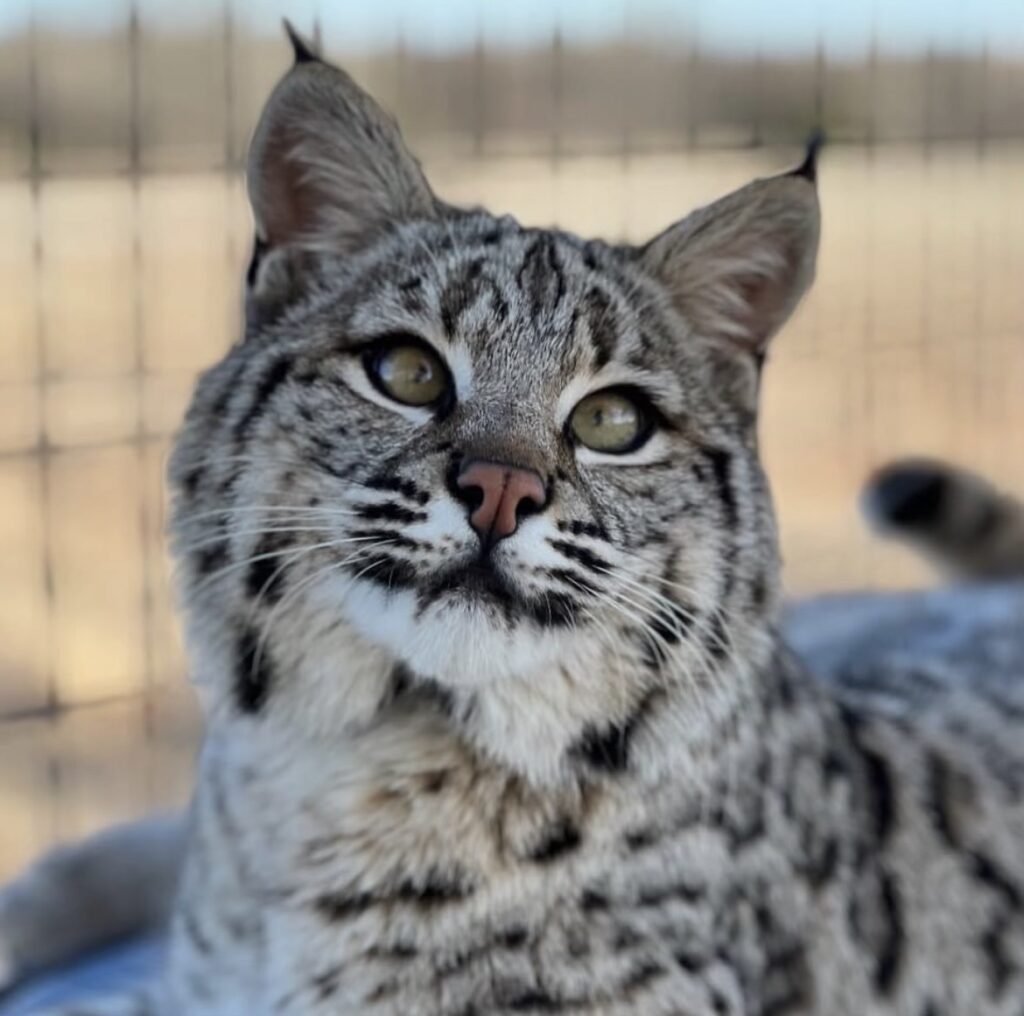
Ricky is a young bobcat born on May 17, 2023. He arrived at Cat Tales after being orphaned and has quickly become an important ambassador for his species.
Ricky is especially recognizable because he is cross-eyed, a trait that makes him all the more unique and memorable to guests. He is curious, expressive, and a wonderful reminder that every animal has an individual story.
His presence helps visitors understand both the vulnerability of young wild animals and the long-term responsibility involved in caring for them when they cannot return to the wild.
How We Care for Bobcats
Caring for bobcats requires experience, observation, and respect for the needs of a small but powerful wild predator.
Bobcat care at Cat Tales includes:
- Carefully prepared diets based on each bobcat’s age, size, health, and individual needs
- Daily observation by trained animal care staff and students
- Enrichment that encourages natural behaviors such as climbing, stalking, scent investigation, pouncing, and exploration
- Protected-contact care routines that keep both animals and people safe
- Veterinary care, wellness monitoring, and age-appropriate support
- Habitat maintenance, shade, bedding, climbing areas, and seasonal comfort
Every bobcat has a care plan designed around who they are as an individual.
Why Bobcats Matter
Bobcats are native predators that help maintain balance in the ecosystems where they live. They are highly adaptable, but they still face challenges from habitat loss, human conflict, vehicle strikes, and the exotic pet trade.
One of the most important messages our bobcats help teach is that wild cats do not make good pets. Even smaller wild cats have powerful instincts, specialized care needs, and behaviors that do not belong in a household setting.
When visitors meet the bobcats at Cat Tales, they see more than a beautiful wild cat. They see the responsibility, respect, and long-term commitment required to care for wildlife.
Visiting the Bobcats
Bobcats are often a favorite stop for visitors because they are smaller than big cats but still full of wild energy and personality. Depending on the weather, time of day, and each individual bobcat’s preferences, they may be resting, watching guests, exploring, climbing, or engaging with enrichment.
The best visits happen when guests slow down and look for details: a twitching tail, a focused stare, a quiet movement through the habitat, or a playful response to enrichment.
Every bobcat chooses how to spend the day, and every visit offers something a little different.

Support Bobcat Care
Your support helps provide food, veterinary care, enrichment, habitat maintenance, and lifelong care for the bobcats at Cat Tales Wildlife Center.
When you sponsor the bobcats, donate, become a member, or visit the sanctuary, you help care for remarkable wildlife ambassadors and support education that helps people better understand native wild cats.
Your sponsorship helps care for these wildlife ambassadors every day. Choose a one-time sponsorship to make an immediate impact, or become a monthly sponsor to provide steady support for food, veterinary care, enrichment, habitat maintenance, and lifelong sanctuary care.
Frequently Asked Questions
Are bobcats dangerous?
Bobcats are wild animals and should always be respected. They are smaller than big cats, but they are still skilled predators with sharp claws, teeth, and strong instincts.
Do bobcats make good pets?
No. Bobcats are wild animals and do not make good pets. They require specialized diets, secure habitats, veterinary care, enrichment, and experienced handling protocols.
Can I see the bobcats when I visit?
Most visitors are able to see at least some of the bobcats during their visit, but visibility depends on the weather, time of day, habitat use, and each bobcat’s individual choice.
Why can’t these bobcats go back to the wild?
The bobcats at Cat Tales cannot be released because they depend on human care or were placed in a setting where lifelong sanctuary care is the safest and most appropriate option.
What do bobcats eat?
Bobcats are carnivores. At Cat Tales, they receive carefully prepared diets based on their nutritional needs, health, and age.
How does my visit or sponsorship help?
Admission, memberships, sponsorships, and donations help support daily animal care, food, enrichment, veterinary needs, habitat maintenance, and the education mission of Cat Tales Wildlife Center.